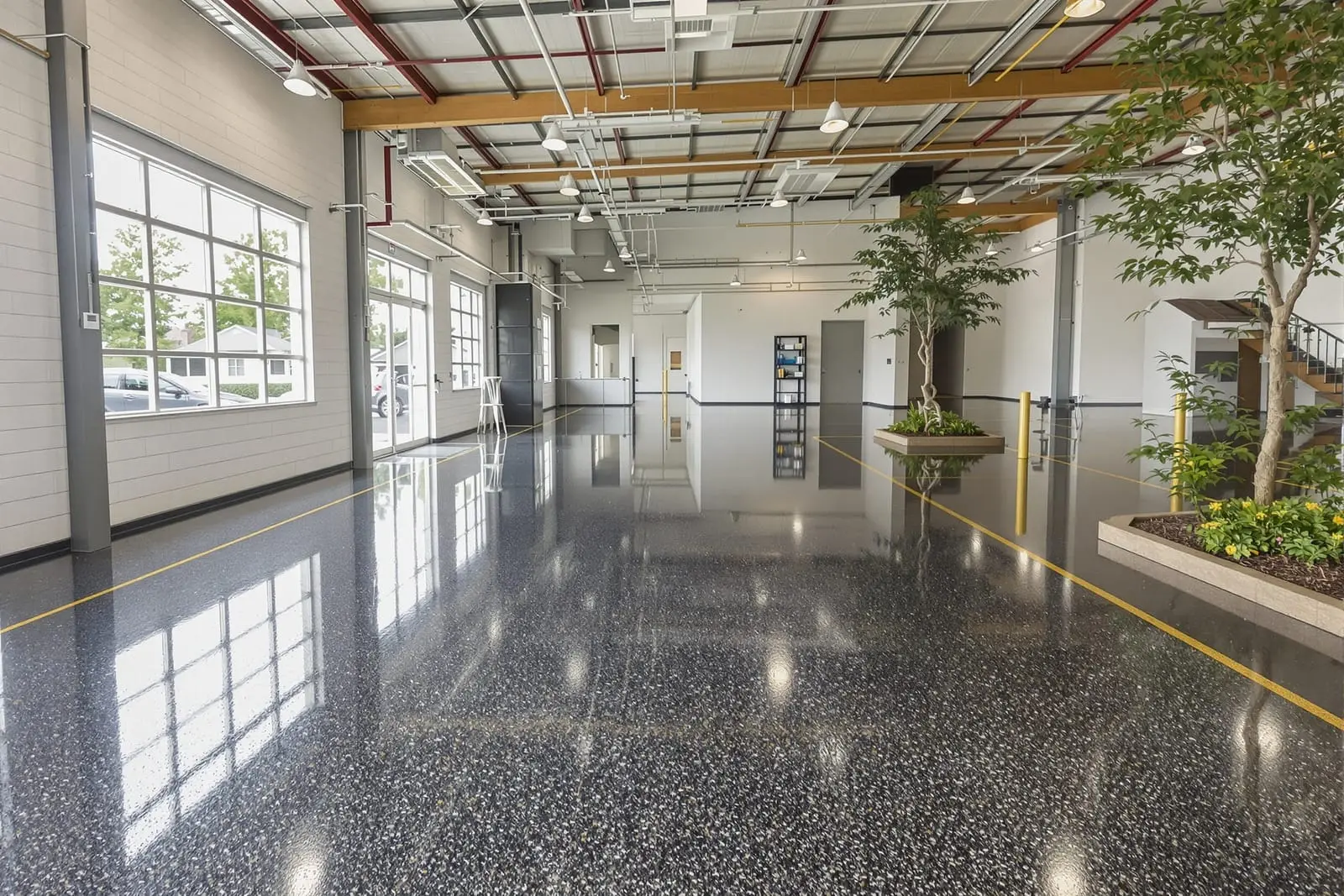
We install industrial concrete floors in Biloxi, MS for warehouses, plants, and storage facilities. Our slabs are designed for forklifts, racking, and heavy loads with attention to flatness and joint layout. Choose from hard troweled, densified, or coated finishes to suit your operation.
Primetime Concrete Biloxi provides professional industrial concrete floors throughout Biloxi, MS and the surrounding area. Our licensed, insured crew delivers safe, clean, on-time work with a free estimate before anything begins. Call (228) 338-2360 or request your free quote.
Durable industrial concrete floors tailored to Biloxi warehouses
Industrial concrete floors are the working surface of your warehouse, not a cosmetic upgrade. At Primetime Concrete Biloxi, we design and install slabs that handle real Gulf Coast conditions: heavy forklifts, pallet racking, moisture from our humid air, and the occasional hurricane season power wash.
For warehouses and industrial facilities in Biloxi, the concrete mix, reinforcement plan, and curing process matter as much as the thickness of the slab. We look at how your space is used, what kind of equipment you run, how often traffic crosses the same aisles, and whether you deal with chemicals or cold storage. Then we build an industrial floor system around those details instead of dropping in a one size fits all slab.
Our team lives and works on the Mississippi Coast, so we understand local soils, the high water table, and the kind of temperature swings your building actually sees. That local knowledge is built into every warehouse and industrial concrete floor we pour, from small repair sections to new construction distribution centers.
Planning your warehouse floor for real loads and traffic
Good industrial concrete floors start with realistic planning. A light storage warehouse on wheeled carts does not need the same slab design as a cross dock facility with constant forklift traffic and high bay racking. When Primetime Concrete Biloxi walks your site, we ask about forklift model and tire type, rack leg loads, point loads from machinery, and whether you may add mezzanines or heavier equipment later.
We use that information to recommend slab thickness (often 6 to 8 inches for typical warehouses in our area, thicker for very high loads), reinforcement type (rebar, welded wire mesh, or fiber reinforcement), and joint layout. For cooler or freezer areas we also evaluate insulation needs to prevent condensation or slab curling. If you anticipate future expansion, we plan the slab edges and control joints so new sections can be tied in without weak cold joints.
Biloxi soil conditions can vary a lot between sites near Back Bay, inland industrial parks, and older reclaimed properties. We coordinate with your geotechnical report when available, or we evaluate base material conditions on site. Where needed, we recommend subgrade stabilization, crushed stone base thickness, and moisture barriers to keep the slab stable and reduce vapor transmission into sensitive storage areas.
How we build industrial concrete floors step by step
Our installation process for warehouse and industrial concrete floors follows a consistent, field proven sequence tailored to Biloxi conditions.
1. Site prep and subgrade: We strip organic material, proof roll the area to find soft spots, and compact the subgrade to the required density. In low lying parts of Biloxi we often recommend additional base rock to get you above minor water intrusion and to improve drainage.
2. Base and vapor control: A graded, compacted stone base spreads loads and resists pumping under forklift traffic. For many warehouses we install a polyethylene vapor barrier to reduce moisture coming through the slab, which helps with adhesives, coatings, and corrosion control.
3. Forming and layout: We set edge forms and lay out column blockouts, door openings, floor drains, and thickened pads under heavy equipment. Joint layout is planned before we pour, so saw cut control joints will land in the right places and not conflict with rack rows or anchor locations.
4. Reinforcement: Depending on your design, we place rebar, wire mesh, or use steel or synthetic fibers in the mix. Around dock pits, ramps, and loading doors, we often add extra steel to control cracking where trucks and forklifts repeatedly cross.
5. Placing and finishing: We pour the concrete using screeds and ride on trowels to achieve the flatness required for your operation. For high rack or narrow aisle systems, we can target tighter flatness tolerances. We install control joints at calculated spacing and depths to guide where shrinkage cracking will occur.
6. Curing and protection: Proper curing is critical in our climate. We typically apply curing compounds and, when needed, schedule extended cure time before heavy use. We coordinate with your contractor or operations team so racking and traffic are phased in without damaging the young slab.
Finish options, coatings, and slip resistance
Industrial concrete floors do not all look the same, and the right finish can make your warehouse safer and easier to maintain. Primetime Concrete Biloxi offers a range of finish and surface treatment options based on how you use the space, what you store, and your cleaning routines.
For many Biloxi warehouses, a hard trowel finish with a clear densifier sealer gives a dense, dust reduced surface that stands up to forklifts and regular scrubbing. In areas exposed to oils, chemicals, or frequent spills, we can prepare the surface for epoxy or polyaspartic coatings that add chemical resistance and allow color coding of aisles, staging zones, and safety walkways.
Slip resistance is a frequent concern in humid climates, especially near loading docks where rain gets tracked in. Depending on your cleaning equipment and safety policies, we can adjust the final trowel, use broomed finishes at ramps, or incorporate textured coatings and aggregate systems. For cold storage, we plan for condensation and ice potential, then coordinate the floor finish with your refrigeration contractor to reduce fall risks.
We also consider reflectivity. A light colored, well finished concrete floor can improve lighting levels, which can let you use fewer fixtures or lower wattage and still see rack labels and product clearly.
Scheduling warehouse floor work in the Biloxi climate
Biloxi weather affects how we schedule and pour industrial concrete floors. High humidity, summer heat, and storm season all change how concrete behaves and how we protect the slab while it cures.
Locally, the best windows for large warehouse pours are often late fall through early spring, when temperatures are moderate and the risk of daily thunderstorms is lower. During hotter months, Primetime Concrete Biloxi adjusts mix designs, uses set control admixtures when appropriate, and plans early morning pours so finishing happens before afternoon heat peaks.
For existing warehouses that must stay in operation, we often phase the work. This can involve dividing the floor into sections and coordinating with your logistics team so some aisles stay open while we work on others. We help you plan temporary storage shifts, alternate forklift routes, and safe buffer zones so your business can keep moving while the new floor is installed or significant repairs are made.
Cost factors for industrial concrete floors in Biloxi
The cost of an industrial concrete floor is driven by more than the price per yard of concrete. At Primetime Concrete Biloxi, we walk customers through the main cost drivers so you can budget realistically and see where upgrades make sense.
Key factors include slab thickness and square footage, levelness and flatness tolerances, reinforcement type, and subgrade preparation. A facility with very high racks and narrow aisle forklifts requires more precise finishing and quality control than a basic storage building, which affects labor time and equipment choices. Sites with poor existing soils, old fill material, or drainage problems may need more excavation and base rock before we ever place concrete.
Coatings, hardeners, and specialty finishes also influence price. A simple sealed slab costs less up front than a multi coat industrial epoxy system with line striping, but the right coating in a chemical handling or food distribution facility can reduce long term maintenance and safety incidents. We also account for phasing needs in active warehouses, since night or weekend work, temporary barricades, and extra mobilizations can change the overall project cost.
We provide written estimates that break down the major components, and when possible we offer options, such as good, better, and best reinforcement or finish systems, so you can match performance to your budget.
Repairs, joint problems, and keeping your floor performing
Even well built industrial concrete floors eventually need maintenance, especially in high traffic Biloxi facilities. The most common issues we see are spalled joints where forklift wheels hit the edges, random cracking that telegraphs through coatings, surface dusting in older slabs, and settlement where underlying soils move.
Primetime Concrete Biloxi specializes in diagnosing the cause before recommending a fix. For joint damage, we may clean and rebuild the edges with high strength repair mortars and then use semi rigid joint fillers that support traffic better than basic caulk. For slabs with uneven settlement or trip hazards, we can discuss grinding or material injection solutions depending on the severity.
If your floor is generating dust that gets into product or equipment, we look at surface hardness and past curing methods. Often, a combination of surface prep and densifier treatment can tighten up the surface. Where chemicals or moisture have damaged coatings, we investigate vapor drive, leaks, and cleaning procedures so that a new coating system actually lasts.
We also help facility managers set up simple maintenance routines, such as the right type of sweeper brushes and neutral cleaners, so the floor keeps its performance and appearance longer and your investment in the slab pays off over the life of the warehouse.
“
Professional warehouse & industrial concrete floors, done right the first time, quality materials, honest pricing, and results that last.
Primetime Concrete Biloxi
Warehouse & Industrial Concrete Floors Across Our Service Area